
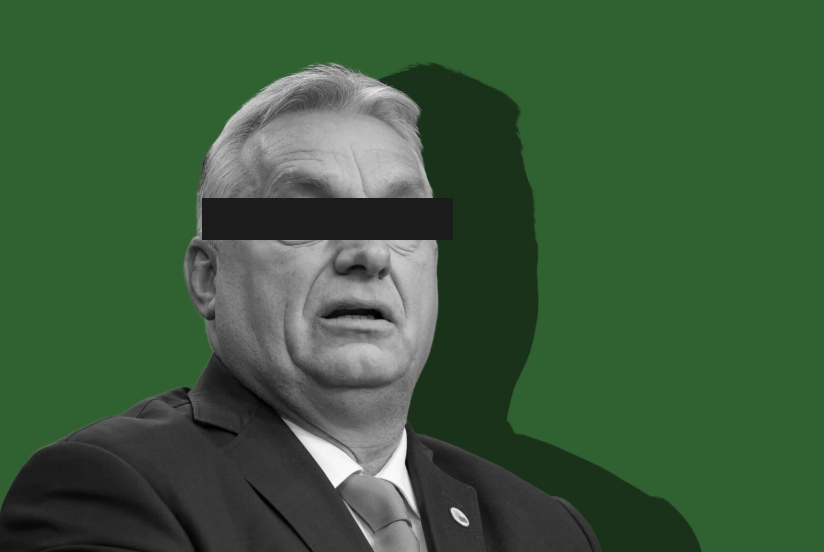
Viktor Orbán conceded defeat after sixteen years in power, and somewhere in Washington and Moscow, two men went to bed with a problem. The Hungarian prime minister was never merely a politician. He was a proof of concept — living evidence that a democracy could be quietly hollowed out from within and that Brussels could be paralysed by a single member state. He ran the authoritarian playbook to the letter, and it held until his own people tore it apart.
The result was not close. Turnout exceeded 77%, a record in Hungary’s post-Communist history — the kind of number that does not speak of preference, but of urgency. Hungarians did not drift toward Magyar. They ran.
The Endorsement as Accelerant
Trump’s team had decided Orbán was worth saving. JD Vance flew to Budapest days before the vote, stood beside the prime minister at a rally, and promised American economic might as a reward for another Fidesz term. It was a remarkable gamble — a sitting vice president of the United States intervening openly in a European election, on behalf of a man Europe’s institutions had spent years treating as a democratic backslider.
And the gamble failed. On a continent already exhausted by Trump’s trade war, his tariffs, his public warmth toward Putin, the Vance visit did not shore up Orbán’s support so much as clarify the choice. Vote for Orbán, and you vote for that axis. Hungarians, in record numbers, declined.
There is a certain poetic justice in this. Orbán had long fashioned himself as the great defender of national sovereignty against foreign meddling. There is some satisfaction in knowing that, in some small part, he lost because foreign meddling on his behalf became too visible to ignore.
What the Kitchen Table Decided
Yet it would be too flattering to Brussels to frame this as a triumph of liberal values. Magyar campaigned almost exclusively on domestic concerns — economic stagnation, collapsing healthcare, corruption that had become ambient. Under Orbán, Hungary earned the rank of the EU’s most corrupt member state.
The voters who delivered this supermajority were not making a grand ideological argument. They were making a practical one. Sixteen years is long enough to judge a government by its results, and the results — crumbling hospitals, hollowed institutions, an economy that rewarded loyalty over merit — had become impossible to defend.
A Deadline, Not a Victory Lap
Here is where Europe must resist the comfort of celebration. Orbán did not invent Hungarian frustration. He harvested it, brilliantly, for nearly two decades. That frustration did not evaporate on Sunday night. It was redirected.
Across the continent, the same soil that grew Orbán is growing others. Housing unaffordable, public services thinning, and the distance between governed and governing widening year by year. Populism is not a personality. It is a weather system, and the conditions that produce it remain very much in place. Magyar’s victory is a window, not a cure.
Europe gets to exhale today. That is real, and it matters. But the lesson of Hungary is precisely that these things can be lost quietly, incrementally, while institutions look the other way and economies leave people behind.


Leave a Reply